
Individual Feeling and Social Judgment
Eugene OneginThis thread follows the recurring conflict between private conscience and public expectations in love, friendship, and reputation.
increasing Bearing strength in each event
 decreasing
Bearing strength in each eventdecreasingTattiana Risks Reputation

Tattiana Risks Reputation
Private feeling made public
Tattiana writes openly to Eugene, crossing the boundary between private longing and social exposure. A young woman’s confession can invite judgment from family and community.
Her action is sincere rather than calculated.
A challenge to convention
The letter places personal truth above the caution expected of her. Its risk makes her emotionally vulnerable, but also distinguishes her from practiced social performers.
The event begins a conflict between what she feels and what the world may permit her to express.
A Rejection Under Observation
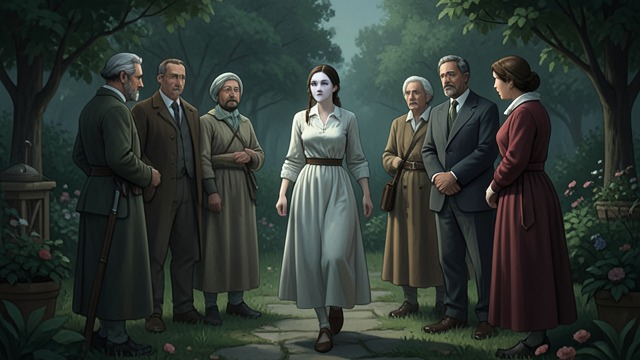
A Rejection Under Observation
Private pain, public life
Eugene rejects Tattiana in a garden conversation, but she must return to a household where her distress can be noticed and interpreted.
Neighbors and family understand her fading condition through the conventions of marriage and propriety.
Feelings become a social problem
The community does not resolve her love; it treats her emotional suffering as a sign that marriage should be arranged.
The contrast shows how private experience is translated into acceptable social explanations.
A Public Quarrel

A Public Quarrel
Reputation intensifies conflict
Lensky’s jealousy begins in a crowded fête, where a flirtation can be interpreted by witnesses as an affront. He turns personal hurt into a claim about honor.
The audience matters even before the duel is arranged.
Choice narrowed by convention
Eugene recognizes a chance to apologize but fears looking weak. Lensky accepts the duel as the proper defense of his standing.
Social judgment closes off peaceful options without removing either man’s responsibility.
Marriage Under Public Eyes
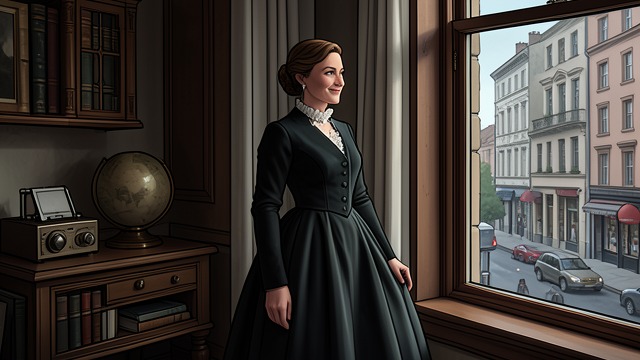
Marriage Under Public Eyes
A role with authority
Tattiana’s status in society gives her an outward composure that Eugene did not encounter in the country. Her marriage shapes how others view her and how she understands her obligations.
The role is real, not merely a costume.
Private feeling remains
When Eugene renews his pursuit, Tattiana must weigh love against the commitments and reputation attached to her marriage.
Public position increases the stakes without dictating her final choice.
Conscience Against Appearances
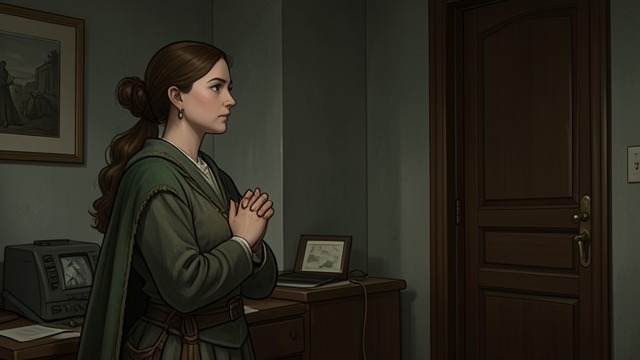
Conscience Against Appearances
What the crowd cannot decide
Tattiana’s choice is not settled by gossip, rank, or the possibility of scandal. She speaks privately with Eugene and acknowledges her own feelings.
Her judgment is grounded in her understanding of fidelity and consequence.
An independent refusal
She refuses to leave her husband even though she says she loves Eugene. The decision resists both the demand to suppress her past and the temptation to treat passion as sufficient reason.
The conflict ends with a choice that belongs to her, not to society’s spectators.
when Tattiana sends Eugene her letter
after the letter’s delivery
after Eugene flirts with Olga
after Tattiana becomes a recognized society woman
in the final scene between Eugene and Tattiana
